
May 31 2022

NRV is a valuation method used in both generally accepted accounting principles (GAAP) and international financial reporting standards (IFRS). Knowing your net realizable value is about more than being able to determine the expected selling bookkeeping price of an asset, product, or service. For example, you should also endevor to set up comprehensive payment terms, use automation, and conduct regular credit checks. Chaser can also be used to help you determine the best net realizable value method for your business.
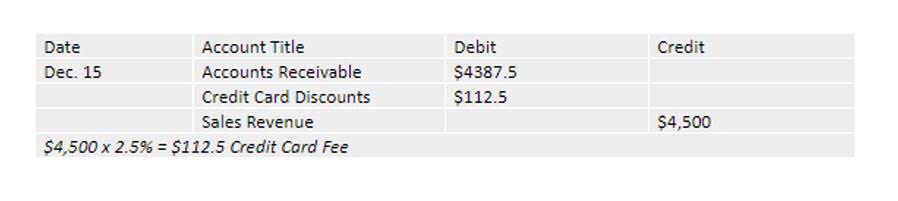
Accounts Receivable Example
- In the next section, we will delve into the formula and calculation of NRV, providing a step-by-step guide to ensure clarity and accuracy.
- As part of its 2021 annual report, Shell reported $25.3 billion of inventory, up more than 25% from the year prior.
- By applying NRV calculations, companies can ensure their financial statements reflect a more accurate and realistic financial position.
- According to the notion of lesser cost or net realizable value, inventory should be recorded at the lower of its cost or the price at which it can be sold.
- By incorporating NRV, businesses can maintain compliance with accounting standards, make informed decisions, and provide stakeholders with a realistic view of their financial health.
- These bookkeeping guidelines must be followed before a company can make a legal claim to any profit.
- Sometimes, external valuation services or appraisals might be required, especially when dealing with specialized or infrequently traded assets.
Alternatively, this Bookstime “expense” may be the anticipated write-off amount for receivables or expenses incurred to collect this debt. The first is the percentage of sales method, in which a percentage of credit sales is estimated to be uncollectible based on historical experience and current economic conditions. The second is the aging of receivables method, in which receivables are categorized based on their age, and different percentages are applied to each category based on the likelihood of collection. By considering potential bad debts, you can develop more realistic projections of your future cash inflows.

Examples of Calculating the Accounts Receivable NRV
Historically, it’s experienced an average of 2% of credit sales as uncollectible. Under GAAP, it is expected for the accountants to apply a conservative approach in accounting – make sure that the profits and assets of the company are not valued more than they should. However, the company anticipates that it will incur a collection cost of $200 and may not be able to collect $300 of the invoice amount due to potential bad debt. It has a wooden table in its inventory, and the expected selling price is $1,000.
- When you set out to determine the expected selling price for an asset, you’re effectively gauging its market value—the price that buyers are willing to pay under normal business conditions.
- Calculating NRV is crucial for businesses that manage inventory, particularly in industries where the market value of goods can fluctuate.
- Since in NRV, a firm also considers the cost, hence it is known as a conservative approach to the transaction.
- Often, a company will assess a different NRV for each product line, then aggregate the totals to arrive at a company-wide valuation.
- NRV provides a conservative estimate of an asset’s value, ensuring financial statements reflect realistic asset valuations.
- As technology evolves and production capabilities expand, unsold inventory items may quickly lose their luster and become obsolete.
GAAP Rules for Bad Debt
If the net realizable value calculation results in a loss, then charge the loss to the cost of goods sold expense with a debit, and credit the inventory account to reduce the value of the inventory account. If the loss is material, you may want to segregate it in a separate loss account, so that management can more easily spot these losses. The cost to prepare the widget for sale is $20, so the net realizable value is $60 ($130 market value – $50 cost – $20 completion cost). Since the cost of $50 is lower than the net realizable value of $60, the company continues to record the inventory item at its $50 cost. When a company determines that a particular debt cannot be collected, it reduces both A/R and the doubtful-accounts allowance by the amount of the net realizable value bad debt.

Step one: Determine the asset values.

Carrying costs and transactional costs of goods are taken into account to not overstate the income statement, and accurately represent the goods’ value to the business. NRV is a conservative method for valuing assets because it estimates the true amount the seller would receive net of costs if the asset were to be sold. Once you’ve learned how to calculate the net realizable value of accounts receivable, you’ll know it can offer numerous benefits for your business, primarily in the areas of financial reporting and decision-making. On a company’s balance sheet, accounts receivable is typically reported as “accounts receivable, net.” That means accounts receivable minus the value of the allowance for doubtful or uncollectible accounts – in other words, net realizable value.